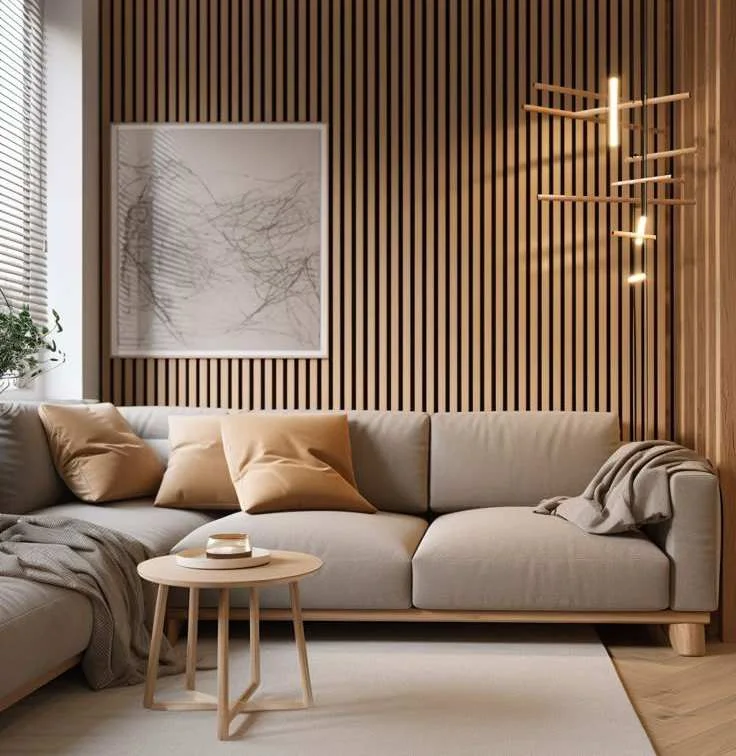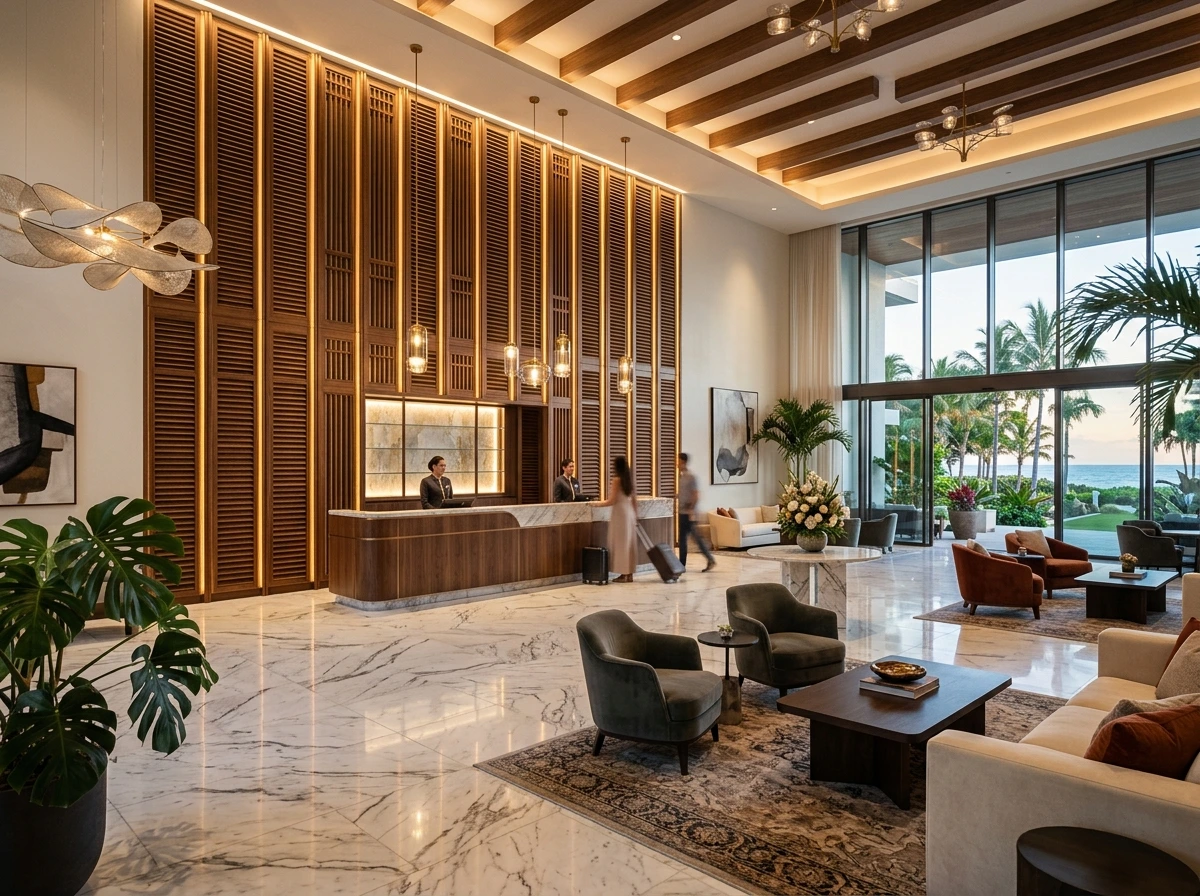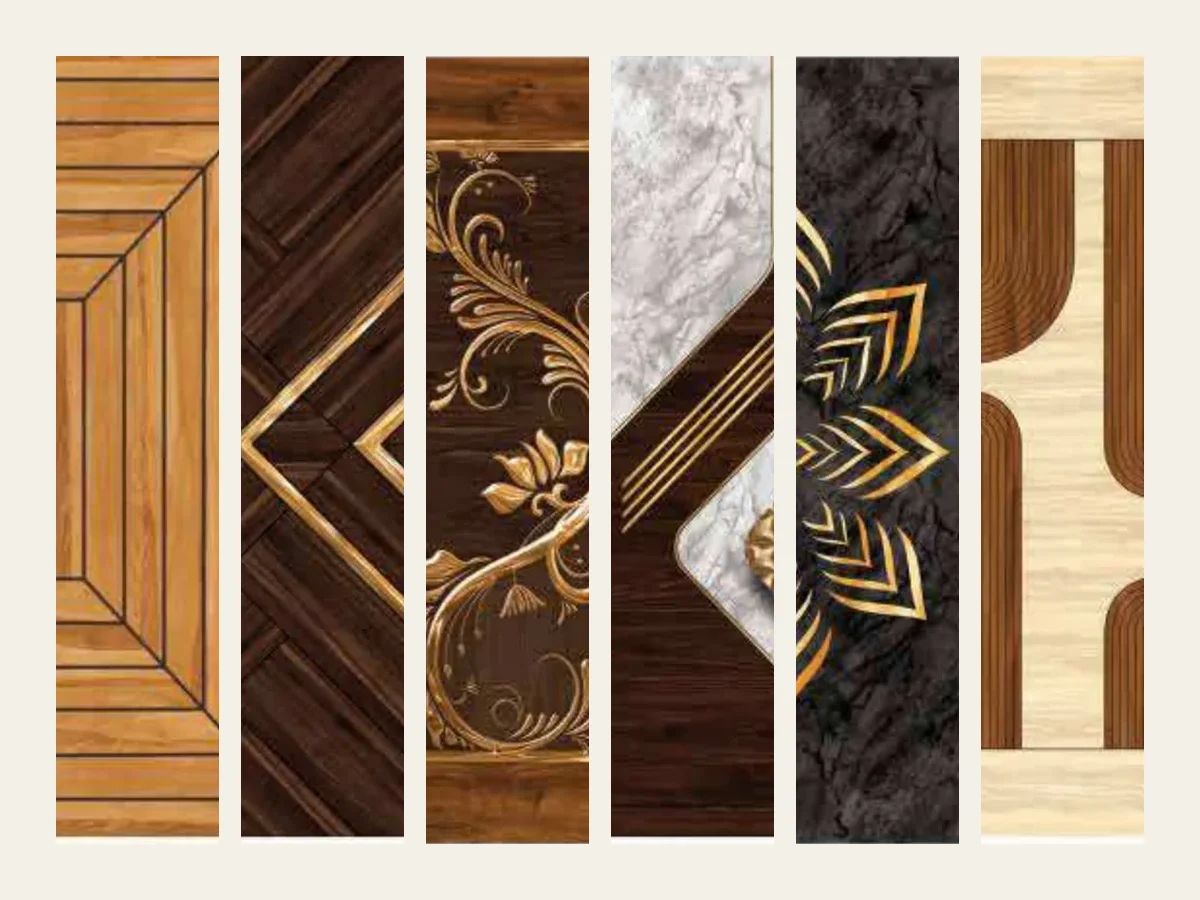
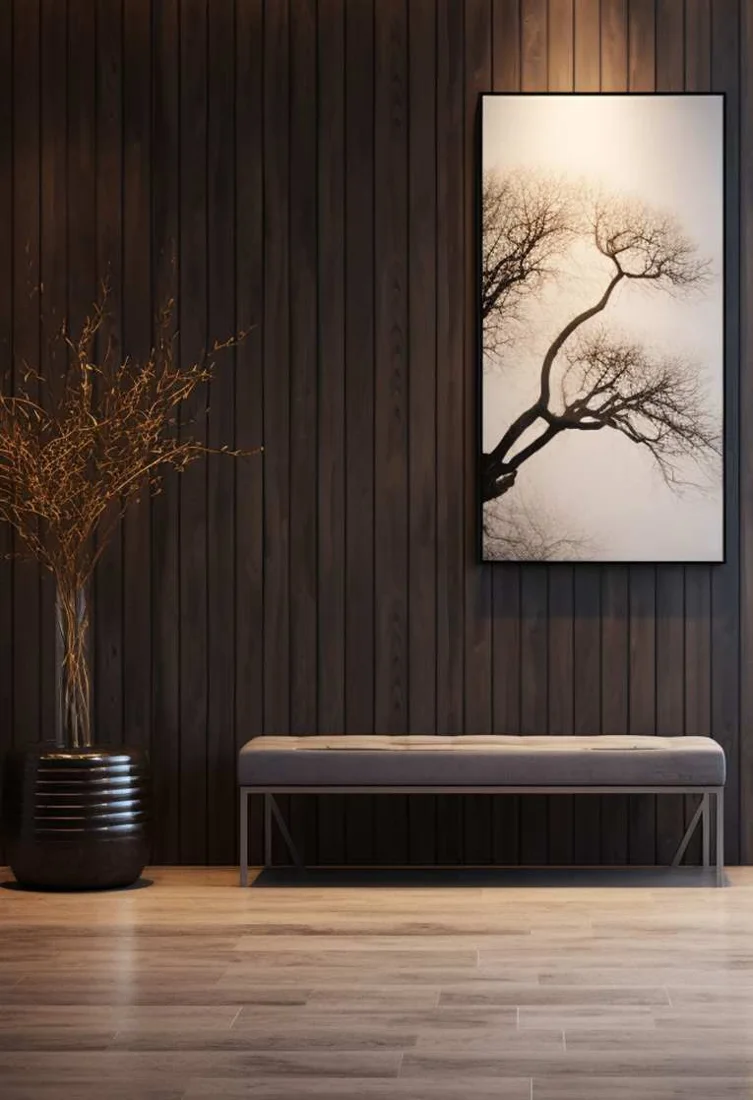
A plain wall can provide structure to a room, but a well-designed wall can define the entire character of the space.
This is where WPC/PVC louvers are increasingly considered for interior and architectural applications. Instead of relying only on paint, wallpaper or conventional wood detailing, louvers introduce depth, repetition and texture into a surface.
But there is an important question:
Why choose a 24 mm louver instead of a thinner decorative panel?
The answer starts with understanding what louvers actually contribute to a space.
What Are WPC/PVC Louvers?
WPC stands for Wood Plastic Composite. Green Plastwood's wider WPC range is designed for applications across both interior and exterior environments, with the catalogue highlighting properties such as water and moisture resistance, termite and borer resistance, fire retardancy, weather and ageing resistance, UV protection and recyclability.
The Green Plastwood catalogue also includes louvers among its dedicated interior and exterior product categories.
A louver is essentially a profiled architectural element that can be arranged repeatedly to create a linear design.
The result can be:
- A feature wall
- A decorative ceiling
- A partition
- An architectural elevation
- A contemporary interior surface
- A wood-inspired design element
Why Does Louver Thickness Matter?
When selecting a louver, dimensions are not just technical specifications.
They influence the visual proportion of the finished installation.
A thicker profile can create a stronger sense of depth and shadow, while thinner profiles can create a lighter visual rhythm.
That is why architects and interior designers should consider:
- Wall size
- Ceiling height
- Desired visual depth
- Spacing between profiles
- Colour
- Surrounding materials
- Lighting
The right combination can turn an otherwise ordinary surface into a deliberate architectural feature.
Where Can 24 Mm WPC Louvers Be Used?
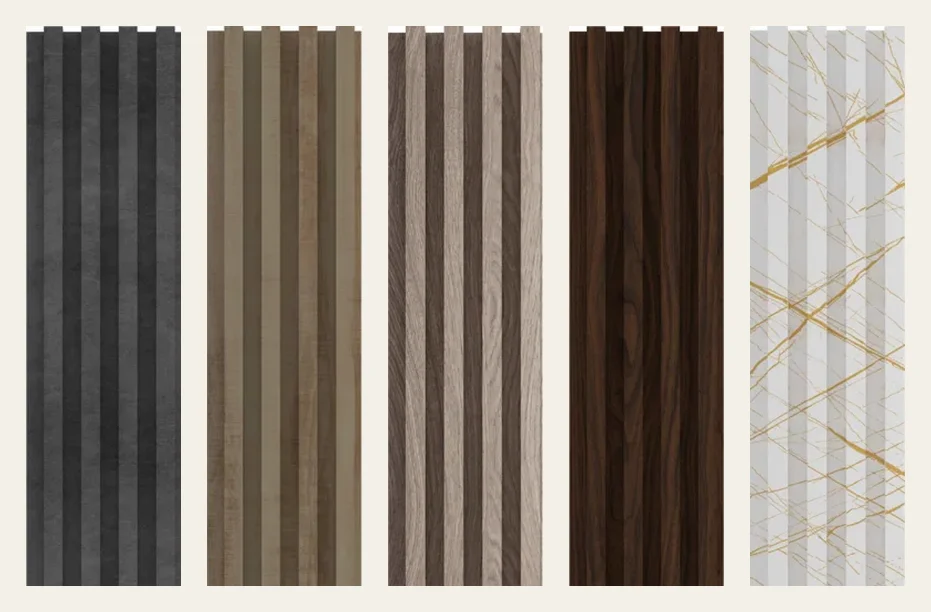
WPC louvers can be considered across residential and commercial design applications.
1. Feature Walls
A feature wall doesn't always need artwork or expensive stone.
Repeated louver profiles can create a strong architectural backdrop behind:
- TV units
- Reception desks
- Beds
- Sofas
- Dining areas
- Entry spaces
2. Ceiling Design
Louvers can also be incorporated into ceiling designs where the goal is to introduce linear detailing.
Depending on the layout, designers can use the direction of the louvers to influence how a space visually reads.
3. Partitions
A louver arrangement can visually separate two spaces while maintaining a more open architectural feel than a solid wall.
4. Commercial Interiors
Louvers can also be considered for:
- Offices
- Reception areas
- Retail interiors
- Hospitality spaces
- Showrooms
The wider Green Plastwood range includes applications across modern interior architecture, partitions, office furniture and related architectural uses.
Why Consider WPC Instead Of Conventional Wood?
Green Plastwood positions its WPC products around characteristics including moisture resistance, termite resistance, no shrinking or swelling, fire retardancy, outdoor adaptability, weather and ageing resistance, and compatibility with conventional processing methods.
The material is therefore positioned as an alternative building material for applications where designers want a wood-inspired appearance while using a WPC product.
However, the right choice should still depend on the application, installation environment and manufacturer's product specification.
How Should You Choose A Louver?
Before ordering, consider:
1. Application
Interior wall, ceiling, partition or exterior application?
2. Dimensions
The louver profile should be appropriate for the scale of the installation.
3. Finish
Choose a finish that works with flooring, furniture and surrounding materials.
4. Colour
Wood-inspired tones can create warmth, while grey or darker finishes can produce a contemporary appearance.
5. Installation system
Confirm the required substructure, fixing accessories and installation method.
Final Thoughts
A louver is not simply a decorative strip.
Used correctly, it becomes part of the architecture.
The combination of profile, spacing, colour, lighting and surface can completely change how a wall or ceiling is perceived.
For designers looking for a structured, wood-inspired architectural finish, 24 mm WPC/PVC louvers are worth evaluating as part of the design palette.
Looking for WPC architectural solutions? Explore the Green Plastwood range or speak with the SNG Eco India team about your project requirements.
Frequently Asked Questions
What are WPC louvers?
WPC louvers are architectural profiles made from wood-plastic composite material and used for decorative wall, ceiling and architectural applications.
Where can WPC louvers be used?
They can be used for interior and exterior walls, ceilings, partitions and other architectural applications, depending on the specific product.
Are WPC louvers suitable for feature walls?
Yes, feature walls are one of the applications for which louver-based designs can be considered.
Can WPC louvers be used on ceilings?
The Green Plastwood range includes louver applications for walls and ceilings.
How should I choose a WPC louver?
Consider the application, profile dimensions, finish, colour, installation system and project environment.